
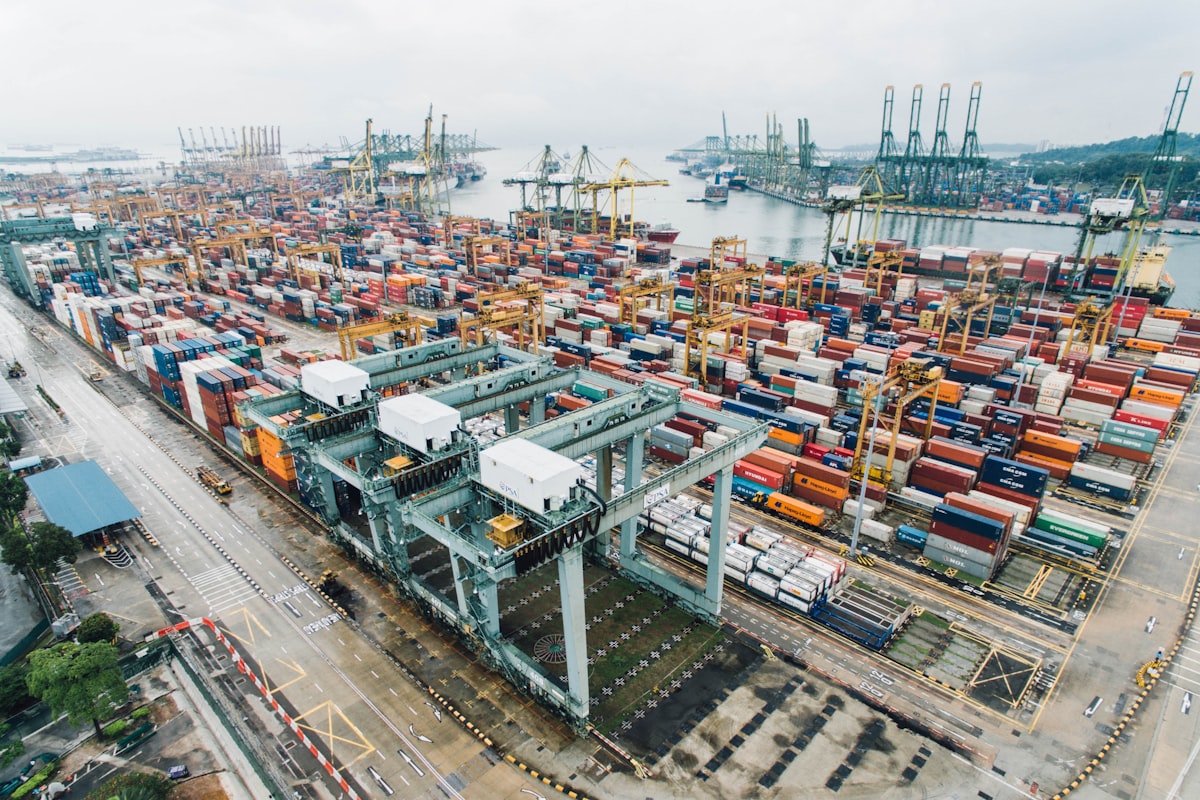
Logistics software has a hard job: it models the physical world, trucks, packages, warehouses, drivers, as it actually moves, in real time, and the physical world does not behave. Things get delayed, break down, take unexpected routes, and go wrong constantly, and the software has to track and adapt to all of it as it happens. On top of that sit scale, a lot of moving things generate a lot of events, and genuinely hard optimization problems like routing. The engineers you want can reason about real-time state, high throughput, and the routing math that turns physical chaos into reliable delivery.
Key Takeaways
- Logistics software models the messy physical world in real time.
- Real-time state and high event throughput are core, not edge cases.
- Routing and optimization are genuinely hard computer-science problems.
- Screen for engineers who reason about scale and real-time systems, well beyond CRUD.
Real-Time State Is the Core Challenge
The heart of logistics engineering is tracking a physical reality that is always changing. Where is every vehicle, every package, every driver, right now, and what happens when something is late, reroutes, or fails. This is real-time systems work: ingesting a constant stream of events, keeping an accurate live picture, and reacting as conditions change, which is a different discipline from building an app that mostly serves stored data on request. An engineer who has only built request-response CRUD applications may be unprepared for the real-time, event-driven nature of logistics, where the state is never at rest (hiring engineers for a gaming startup covers a related real-time discipline).
Scale and the Routing Problem
Two more things define logistics engineering. First, scale: many vehicles, packages, and locations generate a high volume of events and updates, so the systems have to handle real throughput rather than toy loads. Second, optimization: routing, deciding how to move things efficiently, is one of the genuinely hard problems in computer science, and doing it well takes an engineer who can reason about optimization rather than only wire up features. Not every logistics role needs a routing specialist, but the domain has real algorithmic depth in its core, and you want at least some engineers who can handle it rather than assuming a naive approach will scale.
| Logistics demand | What it requires |
|---|---|
| Physical world in real time | Real-time, event-driven systems skill |
| Many moving things | Handling genuine scale and throughput |
| Efficient movement | Routing and optimization reasoning |
| Constant change | Systems that adapt, not only store |
A Concrete Version
Ask a candidate how they would build live tracking for a fleet of delivery vehicles. A strong logistics engineer thinks in the right terms: a stream of location and status events coming in constantly, keeping an accurate real-time picture, handling the cases where a vehicle goes offline or a delivery fails, and doing it at the scale of the whole fleet. If routing is involved, they know that deciding efficient routes is a hard problem, not a simple sort. A candidate from a standard CRUD background tends to imagine periodic updates to a database and a simple map, underestimating the real-time, high-throughput, and optimization realities that make logistics its own discipline. That gap reveals whether they grasp it.
The Honest Counterpoint
Not every logistics engineer needs to be a real-time-systems and optimization expert, and staffing entirely with specialists would be overkill and expensive. Logistics products have plenty of ordinary work too, dashboards, admin tools, integrations, where a strong generalist fits well. The specialized real-time and optimization skills are essential for the core tracking and routing systems and less necessary for the surrounding software. So match the hire to the piece: reason-about-scale-and-real-time specialists for the core, capable generalists for the rest, and do not force every role to clear the highest algorithmic bar. The mistake is either understaffing the hard core or over-specializing the whole team.
Cost and Sourcing
A senior logistics engineer with genuine real-time and scale experience in the US commonly runs $150 an hour or more. Nearshore in Latin America, the same seniority lands around $60 to $95 an hour, with the overlap that helps because logistics systems are operationally live and issues are urgent (why timezone overlap matters). Screen the core-system hires for real-time and optimization reasoning, use capable generalists for the surrounding work, and hold the bar with a vetting process built to surface how candidates reason about scale. See available engineers.
Frequently Asked Questions
What is different about hiring for a logistics startup?
Logistics software models the messy physical world in real time, which demands real-time, event-driven systems skill, the ability to handle genuine scale and event throughput, and reasoning about hard routing and optimization problems, well beyond standard CRUD work.
What should I test in a logistics engineering interview?
For core roles, how they handle a constant stream of real-time events at fleet scale, including failures and offline cases, and whether they understand that routing is a genuinely hard problem rather than a simple sort.
Do all logistics engineers need real-time and optimization expertise?
No. The core tracking and routing systems need it; the surrounding dashboards, admin tools, and integrations suit strong generalists. Match the hire to the piece rather than forcing every role to clear the highest algorithmic bar.
How much do logistics engineers cost?
In the US, commonly $150 an hour or more for a senior with real-time and scale experience. Nearshore in Latin America, around $60 to $95 an hour at the same seniority.
The Bottom Line
Logistics engineering is the discipline of modeling the messy physical world in real time, at scale, with hard optimization at its core. The engineers you want reason about real-time state, high event throughput, and the routing math that turns physical chaos into reliable delivery, rather than assuming a CRUD app will do. Put real-time and optimization specialists on the core systems and capable generalists on the surrounding work, screen for how candidates reason about scale, and you build software that keeps up with the physical world it tracks.
Roberto Espinoza is CEO of Ruzora, which helps US startups hire pre-vetted senior LATAM engineers, with a vetted shortlist in 72 hours. See available engineers.