
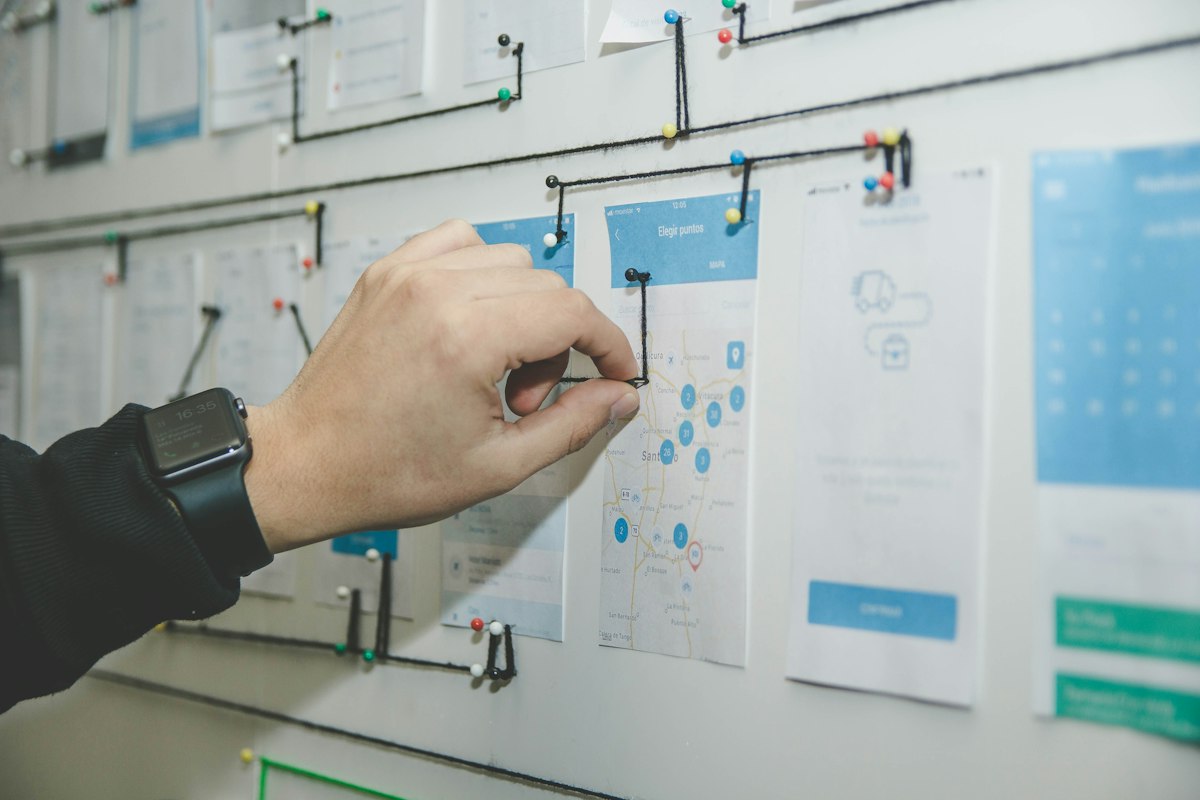
Ask three agencies to quote the same app and at least one will propose a "discovery phase" first, often at a price that makes owners suspicious. Sometimes the suspicion is fair. Often the discovery phase is the most useful money in the whole project.
Here is how to tell the difference.
Key Takeaways
- Discovery is the planning stage: it turns an idea into a written plan a builder can price and deliver.
- It should end with things you can hold: a scope, screen sketches, acceptance criteria, and a fixed quote.
- For a small business app, it is days to two weeks of work, and the output is yours to keep.
- Be wary of a discovery phase with no defined deliverables or no end date.
What Actually Happens
Discovery answers the questions nobody can answer from a paragraph of description:
- Who uses this, and what does each kind of user need to do?
- What happens today, and what data moves over?
- What are the two or three hard parts, the ones that decide the budget?
- What is in version one, and what waits?
- Which tools, hosting, and integrations make sense?
On our own software factory projects, this is the first of four phases, discovery and architecture, and it typically takes one to two weeks. Its job is to turn the scope behind your approved fixed price into a plan the engineers build from. The price itself comes first, from a 72-hour scoping, because nobody can honestly fix a price on an unclear idea.
What You Should Receive
| Deliverable | What it is | Why it matters |
|---|---|---|
| Scope document | A plain list of features, users, and exclusions | The basis of the price |
| Screen sketches | Rough layouts of the main screens | You see the app before paying to build it |
| Acceptance criteria | How each feature will be tested | Decides when a milestone is done |
| Technical plan | Tools, hosting, integrations, and why | Avoids expensive early mistakes |
| Risks | The hard parts, named | No surprises in month two |
| Milestones and price | Stages with a price each | The contract attachment |
If a discovery phase ends with a slide deck and a vague "next steps" slide, you paid for a sales meeting.

What It Should Cost
It depends on the size of the idea. A rule of thumb: discovery for a small business app is a small slice of the total build, and the deliverables should be usable by any developer, including one who did not write them. That second part is the real test. If you could take the plan to someone else and get a fixed quote from it, the money was well spent, whoever builds it.
For some ideas, discovery costs nothing. A clear, small idea (one kind of user, no payments) can be scoped in a conversation. Our free honest read is a lightweight version: it asks the key questions and ends with a short spec any developer can quote from. For many owners, that is enough discovery to get a real price.
Signs of Padding
- No end date. Discovery should be timeboxed.
- No named deliverables. "Workshops" is not a deliverable.
- Hourly billing with no cap. Planning can expand forever.
- The plan only works with them. Custom tools, vague notes, nothing another developer could use.
- It repeats what you already gave them. If you arrive with a detailed spec, discovery should be short.
A Concrete Version
An owner of a property management company wants a portal where tenants report repairs and contractors update their progress. The first quotes range widely, because each agency imagines a different app.
A discovery phase of about a week produces:
- Three kinds of users: tenants, contractors, office staff.
- Version one: tenants submit a request with photos, office assigns it, contractor marks it done. Rent payments are excluded.
- Hard parts: notifications to contractors who do not want another app (solved with text message links), and keeping photos private per property.
- Four milestones with acceptance criteria and a fixed total.
The owner now has a plan three different firms can quote on the same basis. The quotes stop ranging wildly, because everyone is pricing the same thing. That alone usually saves more than the discovery cost.
The Honest Counterpoint
Discovery can become a way to delay the hard decision. Some owners want more and more planning because building feels risky. Past a point, the only way to learn more is to build something small and put it in front of users. If a second or third round of discovery is being proposed, ask what question it answers that a first milestone would not. Also, for very small projects, a formal discovery phase can cost a large share of the build. There, a one-page scope and a short call are enough.
Frequently Asked Questions
Can I skip discovery if I have a detailed spec?
Often you can shorten it. A builder still needs to check the spec for gaps, but that is a review, not a phase. See how to write a software requirements document.
Should discovery be paid?
For larger projects, it is fair to pay, as long as you keep the deliverables. For small ideas, a good builder will often scope as part of quoting.
What if discovery shows the idea is too expensive?
Then it did its job. You can cut scope, change the approach, or stop, having spent a small amount instead of a large one. Read what to leave out of the first version of your app.
Who should attend from my side?
You, and whoever does the work the app will replace. The person who fills in the spreadsheet every day knows the exceptions nobody else remembers.
The Bottom Line
A good discovery phase is short, has a fixed end, and produces a plan any developer can price. If you want a free first pass before paying anyone, start with the honest read. For a fuller plan and a fixed price, our software factory runs a 72-hour scoping and then gives you a fixed-price quote. Related: why software quotes vary so much.
Roberto Espinoza is CEO of Ruzora, which builds custom software for business owners at a fixed price and places pre-vetted senior LATAM engineers with US teams. Get a free honest read on your idea.


